What Crypto Wallet Should You Use If You Hold Over $10,000?
By Paul Democritou · Updated November 9, 2026 · 14 min read
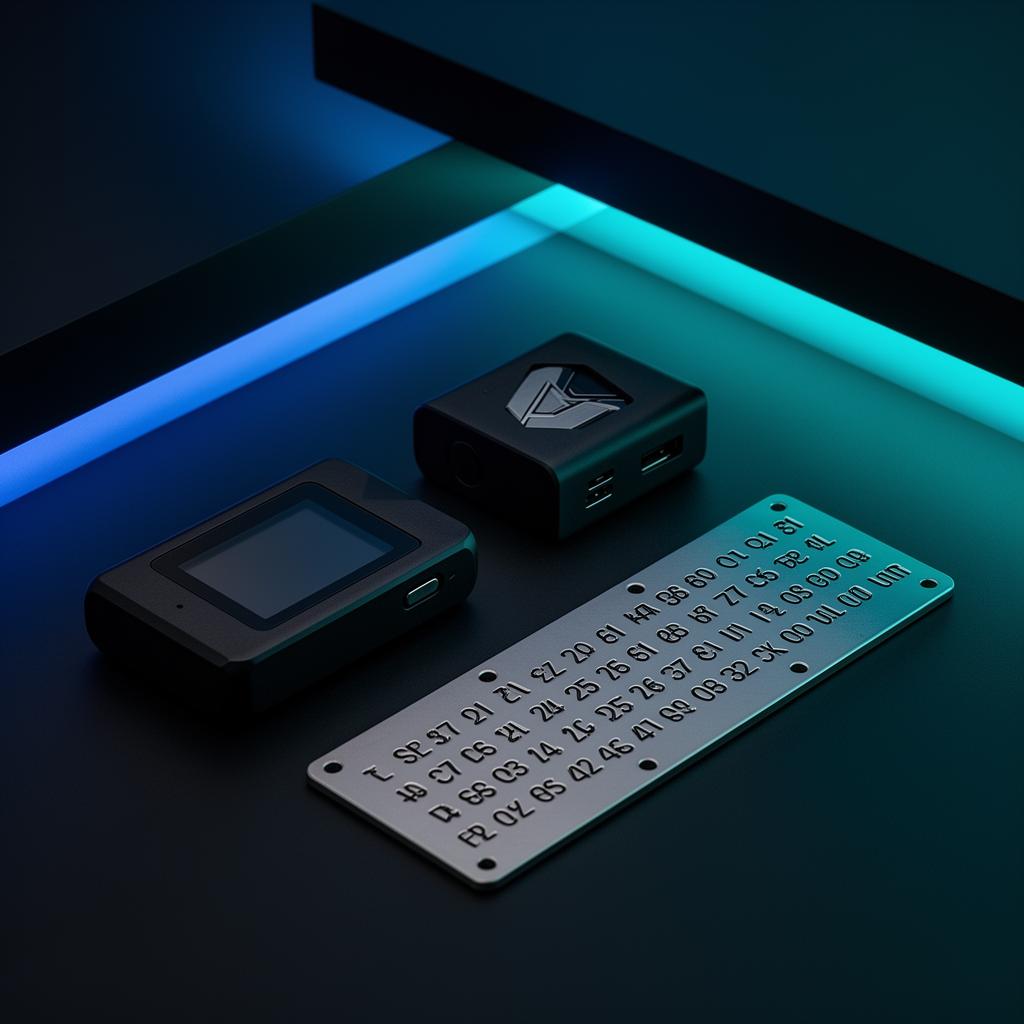
Once your crypto portfolio crosses five figures, your wallet strategy should change. Below $1,000, mistakes are frustrating. Above $10,000, mistakes become financially painful. The difference is not just about the dollar amount. It is about the risk profile that comes with holding meaningful capital in an asset class where losses are often irreversible.
This guide explains how to structure wallet security once your holdings become meaningful. Whether you hold $10,000 or $100,000, the principles here apply. The only thing that changes is the level of redundancy you need.
If you are still deciding which wallet to buy, the Wallet Finder tool can help you identify the right device. This article focuses on the strategy layer that sits on top of that decision.
Direct Answer
Once your crypto holdings pass $10,000, a more serious wallet strategy is usually justified. For most investors, that means using a hardware wallet for long term storage, improving seed phrase protection, and separating active funds from savings rather than keeping everything in one place.
The higher your exposure, the less sense it makes to rely on casual wallet habits, a single device, or exchange storage alone.
At a Glance
- Minimum serious upgrade: Hardware wallet plus offline seed phrase backup
- Better setup: Backup device or stronger redundancy for recovery
- Best for larger portfolios: Tiered storage with separate wallet roles
- Biggest mistake: Treating a five-figure crypto portfolio like a small experimental balance
Why $10,000 Changes the Equation
There is a psychological and practical threshold around $10,000 in crypto. Below that number, most people treat their crypto as a speculative experiment. At $10,000 and above, the stakes change significantly.
- You become a larger target. Attackers increasingly use data from exchange breaches, social media, and on-chain analysis to identify high-value targets. If your wallet activity suggests meaningful holdings, you are more likely to receive targeted phishing attempts and social engineering attacks.
- Recovery risk becomes serious. Losing access to $500 is annoying. Losing access to $10,000 or more can have real financial consequences. At this level, your seed phrase backup strategy, device redundancy, and recovery plan all need to be solid.
- Single device failure becomes costly. If your only hardware wallet fails and you do not have a proper seed phrase backup, you could lose everything. At five figures, device redundancy becomes a rational investment.
- Custody decisions carry long-term impact. The wallet and storage strategy you choose now will likely be in place for years. Getting it right from the start saves you from the stress and risk of migrating large balances later.
Security must shift from casual to intentional. For a broader look at safe storage practices, see how to store crypto safely.

As portfolio value increases, security requirements escalate proportionally.
The Three Levels of Serious Self Custody
Self custody means holding your own private keys rather than trusting a third party like an exchange. For portfolios above $10,000, self custody is strongly recommended. But self custody itself has levels.
Level 1: Basic Protection
- Single hardware wallet for all holdings
- Seed phrase stored securely offline on paper
- Who it is for: $10,000 to $25,000 portfolios where crypto is a small portion of net worth
- What it solves: Removes exchange custody risk and keeps keys off everyday devices
This is the minimum viable security for a five-figure portfolio. A single hardware wallet keeps your keys offline and protects against the most common attack vectors. The weakness is a single point of failure at the device level and a single backup location for your seed phrase.
Level 2: Redundant Protection
- Primary hardware wallet for regular use
- Backup hardware wallet stored in a separate location
- Metal seed backup for fire and flood resistance
- Who it is for: $25,000 to $100,000 portfolios or where crypto is a significant portion of net worth
- What it solves: Reduces single points of failure for device access and seed recovery
Level 2 reduces the single point of failure. A backup device restored from the same phrase can restore access quickly if your primary device fails. The metal seed backup protects your recovery phrase against fire, flood, and physical degradation. Store the backup device and seed phrase in different physical locations for geographic redundancy.
Level 3: Tiered Storage
- Cold vault wallet: Hardware wallet used only for long-term holdings, never connected to new apps (majority of portfolio)
- Semi-liquid wallet: Secondary hardware wallet for periodic transactions
- Active wallet: Software or exchange wallet for daily use (minimal balance)
- Who it is for: $100,000+ or investors who interact with their portfolio regularly
- What it solves: Ensures no single compromise can affect the entire portfolio
Level 3 is the standard for serious self custody. By splitting your portfolio across multiple wallets with different security profiles, you ensure that no single compromise can affect your entire holdings. To see how professional investors approach this, read how professional investors store crypto.
Hardware Wallet Is No Longer Optional
If you hold over $10,000 in crypto, a hardware wallet is strongly recommended. This is not marketing advice. It is risk management.
- It isolates private keys. Your private keys never leave the device. They are generated, stored, and used entirely on the hardware wallet, never touching your computer or phone.
- It protects against malware. Even if your computer is infected with sophisticated keyloggers or clipboard hijackers, it cannot access the keys stored on your hardware wallet.
- It reduces browser-based risk. Phishing sites and malicious browser extensions cannot extract your keys. You confirm every transaction on the device itself.
- It does not make every signature safe. The device signs what you approve. A malicious token approval or a phrase typed into a fake site can still lead to loss, so read every request on the device screen.
- It scales with portfolio size. Whether you hold $10,000 or $1,000,000, the same device design applies. The cost is usually small relative to the value it protects.
For a detailed comparison, read our best hardware wallet guide for 2026. If you are unsure whether a hardware wallet is the right step, see how to decide if you need a hardware wallet.
Popular choices for serious investors include Trezor for open-source transparency, Ellipal Titan models for QR-based air-gapped signing, and Ledger for broad ecosystem compatibility. You can compare them on our wallet pages: Trezor, Ellipal, Ledger.
Your portfolio has grown. Has your wallet strategy kept up?
Take the Wallet Finder quizTiered Storage Strategy
Instead of keeping everything in one wallet, serious investors split their holdings across multiple tiers. Each tier has a different security profile and serves a different purpose.
Tier 1: Vault Wallet (Cold Storage)
This is your cold storage. It holds the majority of your portfolio, typically 60 to 80 percent. The vault wallet is used only for rare large transfers and is never connected to new or unfamiliar apps.
- Holds the majority of your long-term assets
- Connected to a computer or phone as rarely as possible
- Backed up with metal seed storage in a separate location
- Used only for large, infrequent transfers
For cold storage options specifically, see the best cold wallets for 2026.
Tier 2: Transaction Wallet
This wallet holds a smaller balance, typically 15 to 30 percent. You use it for periodic transactions: moving funds to an exchange, making purchases, or rebalancing. It provides a buffer between your vault and your daily activity.
- Holds enough for regular transactions
- Can be a secondary hardware wallet or a well-secured software wallet
- Replenished from the vault as needed
- Reduces how often you access your cold storage
Tier 3: Hot Wallet (Daily Use)
This is your daily driver. It holds the minimum needed for immediate use, typically 5 to 10 percent. If this wallet is compromised, the loss is manageable because it holds only a fraction of your total holdings.
- Holds only what you need for immediate use
- Accepts the highest risk in exchange for maximum convenience
- Any loss from this tier is financially manageable
- Replenished from Tier 2 periodically
This tiered approach reduces catastrophic risk. Even in a worst-case scenario where your hot wallet and transaction wallet are both compromised, your vault remains untouched.

A three-tier wallet architecture separates long-term storage from active usage.
Seed Phrase Management at This Level
Your seed phrase is the master key to your crypto. At the $10,000+ level, seed phrase management must be treated with the same seriousness as protecting any other high-value asset.
- Offline storage only. Never store your seed phrase digitally. No screenshots, no notes apps, no cloud storage, no email drafts.
- Metal backup option. Paper degrades and is vulnerable to fire and water. For portfolios above $10,000, a metal seed backup is worthwhile. Products like CryptoTag stamp your words into titanium for fire and flood resistance.
- Secure physical placement. Store your seed phrase in a location that is secure from theft, fire, and unauthorized access. A home safe, bank safe deposit box, or fireproof lockbox are all reasonable options.
- Geographic redundancy. Store copies in at least two separate physical locations to protect against localized disasters.
- Clear recovery planning. Document your recovery process. If something happens to you, a trusted person should be able to access your crypto. For inheritance planning, see our guide on what happens to your crypto if you die.
Before moving significant funds, verify your backup and recovery process, preferably using the manufacturer's non-destructive backup check or a spare compatible device. Do not wipe your only funded device to test an unverified backup. If the phrase may have been exposed, promptly transfer remaining funds to a new wallet securely generated with a different recovery phrase.
Optional passphrase. Many hardware wallets support an extra passphrase that creates a separate hidden wallet. It protects against someone who finds only the recovery phrase, but if you forget the passphrase, the funds in that wallet are lost. Store it separately and include it in your recovery plan.
For a detailed walkthrough, read our guide to storing your seed phrase safely.
Should You Use Multi-Signature?
Multi-signature wallets require multiple private keys to authorize a transaction. For example, a 2-of-3 multi-sig setup means you need any two of three keys to move funds. This eliminates the single-point-of-failure risk that exists with a standard single-key wallet.
Multi-sig becomes relevant at higher portfolio thresholds. For investors holding $100,000 or more, multi-sig adds a meaningful layer of protection. If one key is compromised or lost, the remaining keys can still authorize transactions.
Multi-sig has its own recovery requirements. For Bitcoin multi-sig, you typically need enough recovery phrases plus the wallet configuration (often called the wallet descriptor or the public keys of every cosigner) to rebuild the wallet. Losing that configuration can make recovery much harder. Practice with a small amount first.
However, multi-sig also increases complexity significantly. For most retail investors holding between $10,000 and $100,000, a redundant hardware wallet setup provides excellent security without the operational overhead.
The decision framework:
- $10,000 to $50,000: Level 1 or Level 2 custody is typically sufficient
- $50,000 to $100,000: Level 2 with metal backups and geographic redundancy
- $100,000+: Consider Level 3 tiered storage or multi-sig for the vault tier
Common High-Balance Mistakes
Investors with larger portfolios often make mistakes that are more about complacency than ignorance.
- Storing the entire balance in a hot wallet. Hot wallets are convenient but connected to the internet. Keeping $10,000 or more in a hot wallet is the crypto equivalent of carrying large amounts of cash.
- Leaving funds on an exchange indefinitely. Exchanges are not wallets. They are businesses that can fail, get hacked, or freeze withdrawals. For guidance on moving off exchanges, see how to move crypto from an exchange to a hardware wallet.
- No backup device. A single hardware wallet with no backup means device failure forces you to rely entirely on your seed phrase. A second device provides immediate recovery.
- Sharing seed phrase location with too many people. Your seed phrase location should be known to as few people as possible. Use a sealed, tamper-evident container.
- Advertising your holdings. Posting balances or wallet addresses publicly makes you a target for phishing and physical threats. Keep portfolio size private.
- Connecting the vault to DeFi. Approvals granted from your savings wallet can be exploited later. Use a separate wallet for apps and revoke approvals you no longer need.
- Procrastinating on security upgrades. The wallet and practices that were adequate for $500 are not adequate for $50,000. Review and upgrade your custody as your portfolio grows.
Use the Wallet Finder Tool
If your portfolio is above $10,000 and you want a structured recommendation, use the Wallet Finder tool. It matches your portfolio size and usage pattern with the right device and setup. The quiz takes under 60 seconds.
For the habits that protect every tier, read our crypto security guide, compare device and app roles in hardware wallet vs software wallet, or see where you stand on the 5 levels of wallet security.
The tool is designed to be used multiple times. As your portfolio grows or your usage patterns change, run the quiz again to ensure your setup still matches your needs.
Frequently Asked Questions
Is a hardware wallet necessary above $10,000?
For self custody at this level, a hardware wallet is strongly recommended. It keeps private keys off your everyday phone and computer and requires you to confirm transactions on the device. It does not stop you from approving a malicious transaction or exposing your recovery phrase, so it must be paired with a verified offline backup and careful signing.
Should I use two hardware wallets?
It can help. A second compatible device restored from the same recovery phrase lets you keep access quickly if the first one fails, but it is another copy of the same keys, so it needs the same protection. Your verified recovery phrase backup remains the real safety net, and a second device does not add protection against theft of that phrase.
Is multi-signature required for large holdings?
Not mandatory for most retail investors. Multi-sig increases security but also increases complexity significantly. For portfolios between $10,000 and $100,000, a redundant hardware wallet setup with metal seed backups provides excellent security without multi-sig overhead. Multi-sig becomes more relevant above $100,000 or for institutional-grade requirements.
What is the best hardware wallet for serious investors?
It depends on your priorities. Ellipal Titan models sign by QR code with no USB, Bluetooth or WiFi connection. Ledger provides broad ecosystem compatibility and DeFi support. Trezor offers open-source firmware and a device screen for verifying addresses. The best choice depends on whether you value QR-based isolation, ecosystem breadth, or openness most.
How should I store my seed phrase for a large portfolio?
Write it on paper and stamp it into a metal backup for fire and flood resistance. Store copies in at least two separate physical locations. Never store it digitally. Verify the backup with a non-destructive check before depositing significant amounts. Have a clear recovery plan so that a trusted person can access your crypto if something happens to you.
Should I keep any crypto on an exchange?
Only the amount you are actively trading. Exchanges are businesses that can fail, get hacked, or freeze withdrawals. For long term storage, move your crypto to a wallet you control. The principle of not your keys, not your coins applies especially once holdings become meaningful.
What is the biggest mistake investors make with large crypto holdings?
The biggest mistake is treating a five-figure portfolio with the same casual habits that worked for a small experimental balance. Leaving everything on an exchange, skipping seed phrase backups, and relying on a single device are all common errors that become much more costly as the portfolio grows.
How often should I review my crypto security setup?
At minimum, review your setup whenever your portfolio crosses a new meaningful threshold or whenever your usage patterns change. Many serious investors review their custody strategy quarterly. A wallet setup that was right at $10,000 may not be sufficient at $50,000 or $100,000.
Final Thoughts
Crossing $10,000 in crypto is not just a portfolio milestone. It is a security milestone. The casual approach that works for small experimental holdings becomes a liability when you are protecting meaningful capital.
Upgrade your custody strategy accordingly. At minimum, get a hardware wallet and store your seed phrase securely offline. As your portfolio grows, add redundancy. For larger holdings, consider tiered storage to limit the impact of any single compromise.
The right wallet and the right strategy depend on your specific situation. Use the Wallet Finder tool to align your setup with your portfolio size. Or explore the best crypto wallet comparison for 2026 for a broader view.
Recommended Guides
Best Hardware Wallet in 2026
The top hardware wallets ranked by security, price, and usability.
What Happens to Your Crypto If You Die?
How to plan crypto inheritance so your assets are never permanently lost.
Find the right wallet for your security setup
Run the wallet quiz