Which Crypto Wallet Should You Use Based on How You Invest?
By Paul Democritou · Updated November 9, 2026 · 12 min read
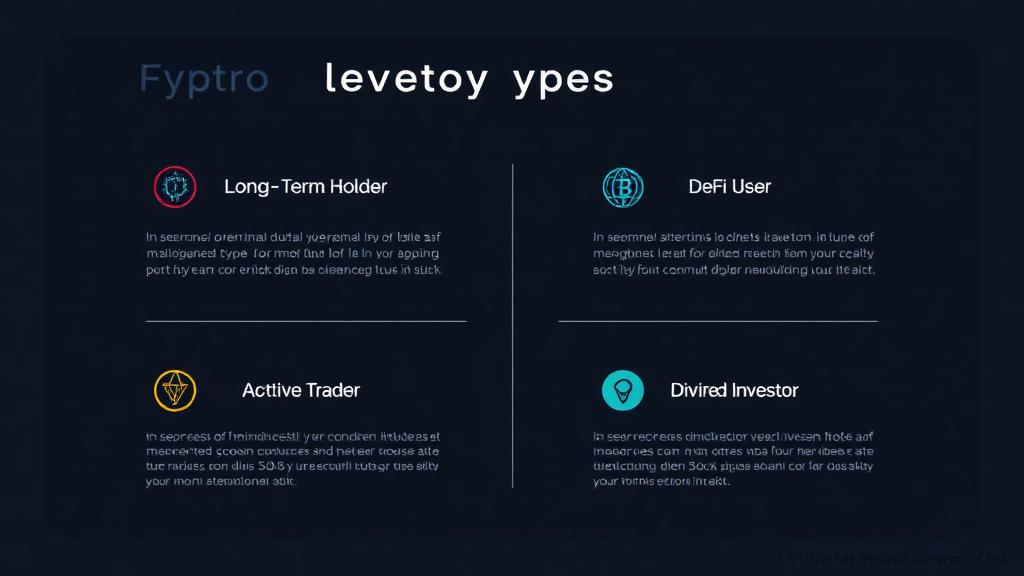
Choosing the right crypto wallet is not about brand names. It is about how you invest. Your wallet strategy should match your behavior, risk tolerance, portfolio size, and trading frequency. Many investors make the mistake of choosing a wallet based on popularity rather than investment style. This guide explains how to align your wallet setup with your investing approach in 2026.
The crypto wallet market has matured significantly. There are now dozens of hardware wallets, software wallets, and hybrid solutions available. But more options does not mean easier decisions. In fact, it makes the process harder unless you have a clear framework for evaluating what you actually need.
This article provides that framework. Instead of listing products and features, it starts with you: how you invest, what you prioritize, and how often you interact with your holdings. From there, it maps you to the right wallet architecture. Whether you are a long-term holder, an active trader, a DeFi power user, or someone who diversifies across multiple strategies, you will find a clear path forward here.
Direct Answer
The best crypto wallet depends on how you invest. Long-term holders should prioritize a hardware wallet with a verified offline backup. Active traders need a tiered system with trading capital on an exchange and savings on a hardware wallet. DeFi users need browser wallets with hardware signing support. Diversified investors benefit from a three-tier architecture separating cold storage, semi-liquid, and active-use funds.
At a Glance
- Long-term holders: Hardware wallet with a verified, ideally metal, seed backup
- Active traders: Exchange for trading + hardware wallet for savings
- DeFi users: Browser wallet for interactions + hardware wallet for storage
- Diversified investors: Three-tier system (cold, semi-liquid, active)
- Key principle: Match your wallet architecture to your behavior, not to brand hype
Why Investment Style Matters More Than Wallet Marketing
Crypto wallets serve different purposes. The marketing around wallets often focuses on features like touchscreens, Bluetooth connectivity, or the number of supported tokens. While those details matter, they are secondary to a more fundamental question: does this wallet match how I actually use crypto?
Some wallets are built for long-term cold storage. They are designed to be used infrequently, prioritizing maximum isolation from the internet. Others are built for active trading, emphasizing speed and convenience. Some are optimized for multi-chain DeFi participation, while others focus on travel security or institutional-grade custody.
The wrong wallet creates friction or risk. If you are a long-term holder using a hot wallet, you are exposing your savings to unnecessary attack vectors. If you are an active trader using an air-gapped hardware wallet for every transaction, you are creating workflow friction that slows you down and may lead to shortcuts that compromise security.
The right wallet creates alignment. It fits naturally into your routine. It matches your risk profile. It makes security easy rather than burdensome. That alignment is what separates good wallet decisions from bad ones.
For a broader overview of how hardware and software wallets compare at a fundamental level, read our best hardware wallet guide for 2026.
Investment Style Categories
There are four primary investor types in the crypto space. Most people fall into one of these categories, though some overlap between two. Understanding where you fit is the first step toward choosing the right wallet setup.
1. The Long-Term Holder
You buy and hold for years. You rarely move funds. You are not interested in trading or DeFi. You want to buy Bitcoin, Ethereum, or a handful of other assets and store them safely until some future date. Security is your absolute priority. Convenience is secondary because you only interact with your wallet a few times per year.
Long-term holders represent the largest segment of crypto investors. They are often people who treat crypto as a savings vehicle or a hedge against inflation. Their primary risk is not market volatility but rather losing access to their funds through poor storage practices.
- Buys and holds for months or years
- Rarely moves funds after initial purchase
- Values security above all else
- Comfortable with less convenient access
- Portfolio is primarily large-cap assets
2. The Active Trader
You move assets frequently. You interact with exchanges regularly. Speed matters. You might be swing trading, day trading, or simply rebalancing your portfolio on a weekly or monthly basis. You need quick access to your trading capital while still keeping your long-term holdings secure.
Active traders face a unique challenge: they need liquidity and speed for their trading activity, but they also need cold storage for the portion of their portfolio they are not actively trading. This requires a layered approach rather than a single wallet solution.
- Trades weekly or more frequently
- Uses exchanges as a primary tool
- Needs fast access to trading capital
- Maintains separate long-term holdings
- Values speed and liquidity for active positions
3. The DeFi and On-Chain User
You connect to protocols. You sign transactions often. You participate in lending, borrowing, yield farming, or liquidity provision. You interact with decentralized applications on a daily or weekly basis. Convenience and flexibility matter because you are constantly approving smart contract interactions.
DeFi users need wallets that integrate seamlessly with the protocols they use. This often means browser-based wallets or hardware wallets that support direct dApp connections. The key challenge is maintaining security while granting the access permissions that DeFi protocols require.
- Interacts with smart contracts regularly
- Uses multiple chains and protocols
- Needs seamless dApp connectivity
- Values flexibility and multi-chain support
- Understands transaction signing and approvals
4. The Diversified Investor
You split holdings across storage tiers. You balance risk and accessibility. You understand that different portions of your portfolio have different security requirements. You might hold Bitcoin in cold storage, keep trading capital on an exchange, and use a hot wallet for DeFi experiments.
Diversified investors are often the most sophisticated users. They treat wallet selection as portfolio architecture rather than a single product decision. Their approach reduces single-point risk by ensuring that no single compromise can affect their entire portfolio.
- Uses multiple wallet types simultaneously
- Segments portfolio by risk and access needs
- Maintains clear separation between tiers
- Regularly reviews and rebalances wallet allocation
- Treats security as a system, not a product
The four primary crypto investor types and their defining characteristics.
Wallet Strategy for Each Type
Now that you have identified your investor type, here is the wallet architecture that matches each approach. These are not rigid rules but proven frameworks that reduce risk while maintaining the access you need.
Long-Term Holder Strategy
- Primary wallet: Hardware wallet (air-gapped QR signing optional)
- Backup: Metal seed storage for fire and flood resistance
- Optional: Secondary backup hardware device stored in a different location
- Priority: Security over convenience, always
For long-term holders who want extra isolation, air-gapped devices such as Ellipal Titan models sign by QR code with no USB, Bluetooth or WiFi connection, which reduces exposure to connection-based attacks. The Ellipal X Card works differently, over NFC with a phone. Isolation does not protect a badly stored seed phrase or a malicious transaction you approve, and a USB or Bluetooth hardware wallet with a good screen is also a solid choice.
Your seed phrase backup is equally important. Write it down on paper and store it in a secure location. For maximum durability, use a metal backup solution like CryptoTag that stamps your words into titanium. Store copies in multiple secure locations, and verify the backup with a non-destructive check before depositing significant amounts. For a detailed breakdown of seed phrase storage, read our crypto security guide for 2026.
Active Trader Strategy
- Primary wallet: Secure exchange wallet for active trading capital
- Secondary: Hardware wallet for long-term storage portion
- Buffer: Small hot wallet for quick movements between platforms
- Priority: Liquidity tiering is critical
Active traders should never keep their entire portfolio on an exchange. The trading capital you actively use can stay on a reputable exchange with strong security practices, two-factor authentication (ideally a passkey or security key rather than SMS), and withdrawal whitelisting. But any capital you are not actively trading should be moved to a hardware wallet.
Think of it like a business checking account versus a savings account. Your checking account has enough for daily operations. Your savings account holds the rest. The same logic applies to crypto. Keep your trading float accessible and your savings locked down.
A small buffer wallet, such as a software wallet on your phone, can serve as a quick transfer tool between your exchange and your hardware wallet. This prevents you from needing to connect your hardware wallet every time you want to move a small amount.
DeFi User Strategy
- Primary wallet: Browser-based hot wallet for daily interactions
- Secondary: Hardware wallet for large balances
- Best practice: Use hardware signing where possible
- Priority: Seamless dApp connectivity with fallback security
DeFi users face the most complex security challenge. You need to interact with smart contracts frequently, which means your wallet needs to be connected to the internet. But you also need to protect your larger balances from smart contract exploits, phishing sites, and malicious token approvals.
The solution is to separate your interaction wallet from your storage wallet. Use a browser wallet like MetaMask or Rabby for daily DeFi activity, but keep only the capital you are actively deploying in that wallet. Your larger holdings should remain in a hardware wallet that you only connect when moving significant amounts.
Many hardware wallets now support direct dApp connections. Ledger integrates with numerous DeFi platforms, allowing you to use hardware signing for your transactions. This keeps keys on the device while you interact, but the device signs exactly what you approve. Read every approval on the device screen, set spending limits instead of unlimited approvals where possible, and revoke approvals you no longer use. Use a separate wallet for new or unfamiliar protocols. For what hardware signing can and cannot stop, see can a hardware wallet be hacked, and for backups, our seed phrase storage guide.
Diversified Investor Strategy
Three-tier system:
- Tier 1, cold storage: Hardware wallet for long-term holdings (60-80% of portfolio)
- Tier 2, semi-liquid: Secondary hardware wallet or secure exchange for medium-term positions (15-30%)
- Tier 3, active usage: Hot wallet or exchange for trading and DeFi (5-10%)
The diversified approach is the most resilient. By splitting your holdings across multiple wallets and storage types, you reduce the chance that a single failure can compromise your entire portfolio. Even if your hot wallet is compromised, your cold storage remains untouched.
This approach requires more management overhead, but it dramatically reduces risk. Think of it as insurance architecture. You are not just protecting against theft. You are protecting against device failure, seed phrase loss, exchange bankruptcy, and your own potential mistakes.
If you want a personalized recommendation for your specific situation, the Wallet Finder tool on the homepage can help you identify which wallets match your profile in under 60 seconds.
Decision Framework
If you are still unsure which category you fall into, ask yourself these four questions. Your answers will determine your wallet architecture.
1. How often do I move funds?
- Rarely (a few times per year) → Long-term holder setup
- Weekly or more → Active trader or DeFi user setup
- It varies by asset → Diversified setup
2. What percentage of my portfolio is long term?
- 90% or more → Long-term holder setup
- 50-90% → Diversified setup
- Less than 50% → Active trader or DeFi user setup
3. Do I interact with DeFi protocols weekly?
- Yes → DeFi user setup with hardware signing
- Occasionally → Diversified setup with a DeFi allocation
- Never → Long-term holder or active trader setup
4. Would losing this wallet financially hurt me?
- Significantly → Hardware wallet is essential for your primary holdings
- Somewhat → At minimum, use a hardware wallet for the majority
- Not much → A well-secured software wallet may be sufficient for now
Your answers to these four questions create a clear picture of your needs. Most investors find that they need at least two wallets: one for security and one for access. The decision framework above helps you determine the right balance.

A visual framework for mapping your investment behavior to the right wallet architecture.
Self Custody Strategy for 2026
Self custody means holding your own private keys rather than trusting a third party like an exchange. In 2026, self custody is more accessible and more important than ever. Regulatory uncertainty, exchange failures, and increasing sophistication of attacks all point to the same conclusion: if you do not control your keys, you do not fully control your crypto.
A strong self custody strategy in 2026 includes several components:
- Hardware wallet as the foundation. Your primary holdings should always be on a hardware wallet. This is non-negotiable for any serious investor.
- Seed phrase redundancy. Your seed phrase should be backed up in at least two physical locations. Metal backups protect against fire and flood.
- Regular security audits. Review your wallet setup, permissions, and token approvals at least quarterly. Revoke any unused smart contract approvals.
- Separation of concerns. Different assets and activities should use different wallets. Do not use your cold storage wallet for DeFi interactions.
- Emergency plan. Have a documented plan for what happens if you lose access to a device or if something happens to you. Trusted family members should know how to access your holdings if necessary.
Self custody is not about being paranoid. It is about being responsible. The same way you would not leave large amounts of cash lying around your house, you should not leave large amounts of crypto in wallets that are not designed for the way you invest.
For a comprehensive security checklist, read our complete crypto security guide for 2026.
Common Mistakes
Even experienced investors make wallet mistakes. Here are the most common ones and how to avoid them:
- Storing your entire portfolio in a hot wallet. Hot wallets are convenient but inherently less secure. They should hold only what you need for immediate use. Everything else belongs in cold storage.
- Using only one wallet. A single wallet creates a single point of failure. If that wallet is compromised, lost, or damaged, your entire portfolio is at risk. Use at least two wallets with different security profiles.
- Ignoring seed phrase redundancy. Writing your seed phrase on a single piece of paper and keeping it in one location is not sufficient. Paper degrades, gets lost, or burns. Use metal backups and store copies in multiple secure locations.
- Failing to separate trading capital from long-term holdings. Mixing active trading funds with long-term savings increases your exposure. If your trading account is compromised, your savings should remain untouched because they are in a separate, more secure wallet.
- Choosing a wallet based on brand recognition alone. The most popular wallet is not necessarily the best wallet for your situation. Your investment style, portfolio size, and technical comfort level should drive the decision, not marketing.
- Never reviewing wallet permissions. If you use DeFi, smart contract approvals accumulate over time. Old or unused approvals can become attack vectors. Review and revoke permissions regularly.
Use the Wallet Finder Tool
If you want a structured recommendation based on your specific answers, use the Wallet Finder tool on the homepage. It asks six quick questions about your budget, security preferences, supported coins, and experience level, then recommends the most suitable hardware wallets for your profile.
The tool simplifies decision-making without guesswork. It is designed to be run multiple times as your needs change. If you start as a long-term holder and later begin trading actively, run the quiz again with your updated priorities. Your wallet setup should evolve as your investment style evolves.
You can also explore our best hardware wallet comparison for 2026 for a side-by-side breakdown of the top devices on the market.
Your investment style may have changed since your last wallet decision.
Retake the Wallet Finder quiz nowRelated Wallet Guides
If you want to explore deeper wallet strategy, security, and portfolio protection guides, start with these:
- Best Crypto Wallet in 2026: Full Comparison for Security, Ease of Use, and Long Term Storage
- What Crypto Wallet Should You Use If You Hold Over $10,000?
Frequently Asked Questions
Which crypto wallet is best for long-term investors?
A hardware wallet with a verified offline backup is typically the strongest option for long-term investors. Ellipal Titan models offer QR-based air-gapped signing. Trezor provides open-source firmware. Tangem offers simplicity for beginners. The key factor is that your private keys stay off everyday devices and your seed phrase is backed up securely in more than one location.
Should active traders use hardware wallets?
Yes, but not for their active trading capital. Active traders should use a tiered approach: keep trading capital on a reputable exchange, store long-term holdings on a hardware wallet, and use a small buffer wallet for transfers. This balances speed with security.
Can I use multiple wallets at the same time?
Yes. Many advanced investors use tiered wallet systems with two or more wallets serving different purposes. This is a common recommendation because it reduces single-point-of-failure risk. A typical setup includes a hardware wallet for cold storage and a software wallet for daily use, each with its own recovery phrase.
What is the best crypto wallet based on investment style?
There is no single best wallet. The right choice depends on how you invest. Long-term holders benefit from hardware wallets. Active traders need tiered setups. DeFi users need browser wallets with hardware signing support. Diversified investors should use a three-tier system. Use the Wallet Finder tool to get a personalized recommendation.
What is self custody and why does it matter in 2026?
Self custody means holding your own private keys rather than trusting a third party like an exchange. It matters because exchange failures, withdrawal freezes and account takeovers have cost users funds. With a hardware wallet, you control your keys and your funds, and you also become responsible for protecting the backup.
How often should I review my wallet setup?
At least quarterly. Review your wallet allocation, revoke unused smart contract approvals, verify your seed phrase backups are intact and accessible, and reassess whether your wallet architecture still matches your current investment style. Run the Wallet Finder quiz again if your priorities have changed.
Final Thoughts
The right crypto wallet depends on how you invest. Not on which brand has the best marketing. Not on which product your favorite influencer recommends. It depends on your behavior, your risk tolerance, your portfolio size, and your trading frequency.
Align your security architecture with your behavior. If you are a long-term holder, keep your assets in a hardware wallet with a verified backup and review the setup periodically. If you are an active trader, create a tiered system that separates your trading capital from your savings. If you use DeFi, implement hardware signing where possible and keep your interaction wallet separate from your storage wallet.
The crypto space moves fast, and your wallet needs may change over time. That is why tools like the Wallet Finder quiz are designed to be used multiple times. As your investment style evolves, your wallet setup should evolve with it.
Start with the right framework. Use the right tools. Protect what you have built. That is what smart crypto investing looks like in 2026.
Recommended Guides
Best Crypto Wallet in 2026
Compare hardware wallets, software wallets, and cold storage options side by side.
What Wallet If You Hold Over $10,000?
Serious portfolios need serious custody strategies.
Find the right wallet for your security setup
Run the wallet quiz