Crypto Address Poisoning: How Fake Wallet Addresses Steal Crypto
Published November 9, 2026 · By Paul Democritou · Wallet Security · Research checked November 9, 2026 · 13 min read
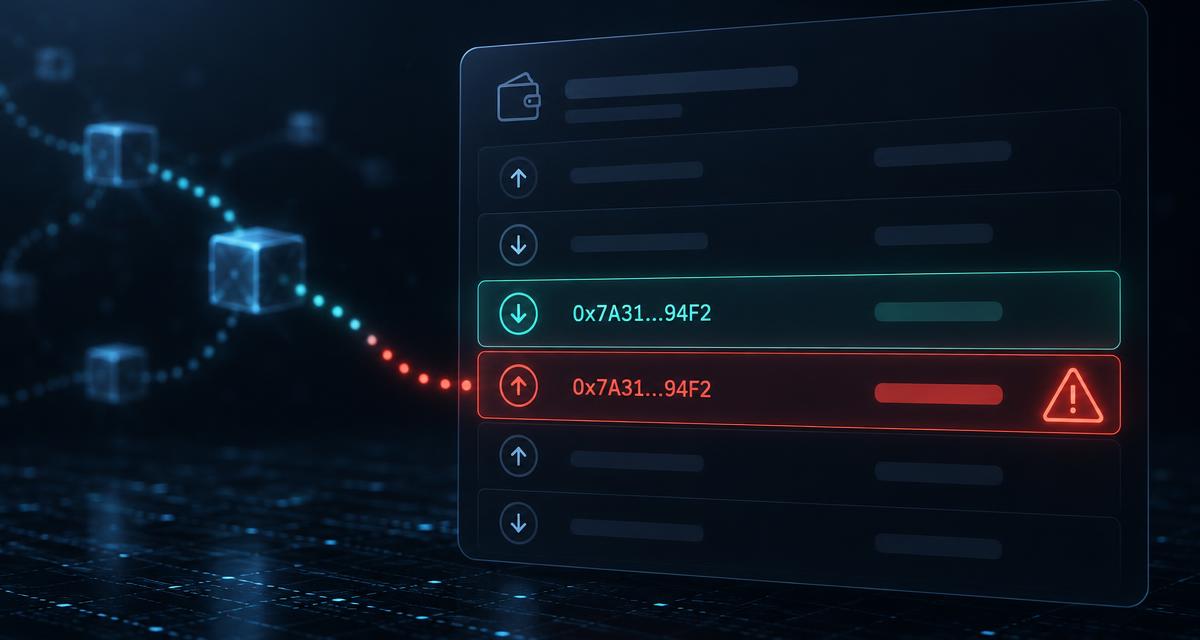
You are about to send crypto to an address you have used before. The first few characters look right. The last few characters look right. You click, paste and confirm.
Except the address in your transaction history belongs to a scammer.
That's crypto address poisoning, a scam that doesn't need your password, your recovery phrase or a hacked blockchain. It waits for you to make one believable copy-and-paste mistake.
The scale is bigger than most people realize. In an on-chain investigation corrected on October 11, 2026, blockchain analytics company Bitquery identified $76.1 million in measured Ethereum losses across 1,635 affected people over the 12 months ending July 31, 2026. That is a documented lower-bound estimate for a defined dataset, not a claim about total losses on every blockchain. Source: Bitquery.
The solution isn't to panic whenever a strange transaction appears. It is to understand the trick, verify the destination correctly, and use a wallet setup that makes dangerous mistakes easier to catch.
Quick Answer: What Is Crypto Address Poisoning?
Crypto address poisoning is a scam that places a fake, lookalike wallet address into your transaction history. The address may share the first and last characters of one you have used before. If you later copy it from your history, you can accidentally send crypto to the attacker. The unexpected transaction itself usually does not compromise your wallet. The loss occurs when you send funds to the wrong destination.
The rule that prevents most of these mistakes: never treat transaction history as an address book. Verify the full receiving address against an independent, trusted source before sending. MetaMask explains this attack.
If you are still deciding which wallet setup fits your needs, take our free wallet finder quiz. A suitable wallet can add useful security checkpoints, but it cannot make an unverified recipient address trustworthy.
The Scam in 30 Seconds
| Stage | What happens | What you should do |
|---|---|---|
| 1. A legitimate transfer | You send crypto to a wallet, exchange deposit address or business partner | Save the destination only after independently verifying it |
| 2. A fake entry appears | An attacker places a tiny transfer, zero-value transfer or misleading token event in your history | Do not assume an entry is yours or trustworthy |
| 3. The address looks familiar | A shortened display hides differences in the middle | Compare the entire destination, not just the ends |
| 4. You make another payment | You copy the wrong destination from recent history | Obtain the real address from its original trusted source |
| 5. The transfer confirms | Funds reach the attacker's wallet and generally cannot be reversed | Preserve evidence and report promptly |
How Address Poisoning Works Step by Step
Step 1: An attacker watches public transactions
On public blockchains, anyone can see transactions and wallet addresses. Scammers monitor transfers, especially repeated payments, stablecoin transfers and accounts with valuable balances. They do not need to break into a wallet to observe its public history.
Step 2: The attacker creates a lookalike address
Wallet addresses are long and difficult to remember. Many interfaces shorten them to their first and last characters. An attacker generates an address designed to look similar when displayed that way.
Illustrative fragments only, not real wallet addresses:
| Address as displayed | |
|---|---|
| Intended recipient | 0x7A31 … 6B8C … 94F2 |
| Attacker's lookalike | 0x7A31 … D50E … 94F2 |
The beginning and ending match. The middle does not. On a shortened wallet screen, both might appear as 0x7A31…94F2.
Step 3: The attacker plants the fake address in your history
They may send a tiny amount of crypto, sometimes called dust. Or a malicious token contract can produce a transfer event that looks like a payment involving your wallet, including a zero-value token transfer.
A zero-value transaction does not mean someone spent your coins. The transaction history can contain activity initiated by someone else. A fake token can even impersonate the name or ticker of a well-known asset.
Step 4: You copy the wrong address
Days or weeks later, you want to make another payment. Instead of requesting or retrieving the verified address, you open recent transactions and select the one that looks right.
This is the actual trap. The attacker has not magically gained your signing keys. They have persuaded you to address a legitimate transfer to the wrong person.
Step 5: You approve the transfer
Your wallet signs and sends the transaction to the destination you entered. If that destination belongs to the attacker, the blockchain carries out the instruction. A hardware wallet may correctly display that very address and still cannot tell you whether it belongs to the intended recipient.
For a related guide, see How to Move Crypto From an Exchange.
The 2026 Research: How Much Crypto Has Been Lost?
This isn't just a theoretical security warning.
In its October 11, 2026 corrected investigation, Bitquery examined Ethereum transfers from August 1, 2025 to July 31, 2026 and identified the following:
| Finding | Bitquery's reported result |
|---|---|
| Ethereum wallets targeted | 7,997,367 |
| People who sent real funds to a lookalike | 1,635 |
| Measured losses | $76,139,215 |
| Median loss | About $300 |
| Largest identified theft | About $50 million in USDT |
These numbers are Bitquery's measurements using its detection method, not independently audited totals for all cryptocurrency networks. Bitquery also corrected earlier estimates that had missed important attacks, which is another reason not to combine older and newer numbers. Read the on-chain investigation.
An independent research team at Carnegie Mellon University measured roughly 270 million address-poisoning attempts across Ethereum and BNB Smart Chain from July 2022 through June 2024, with at least $83.8 million in losses identified in that different period and dataset. The two studies overlap neither in methodology nor in the full period covered, so their figures must not be added together. Carnegie Mellon research.
The takeaway is not that most suspicious transfers succeed. It's that a tiny proportion of mistakes can still cause devastating losses when attackers operate at scale.
A Real Case: The $50 Million Lookalike Address
Bitquery's corrected investigation describes a particularly costly incident on December 19, 2025. A wallet that had previously sent repeated USDT payments to a familiar destination made a small test transfer. A lookalike address then appeared in the wallet's transaction activity. The sender subsequently transferred approximately $50 million in USDT to the attacker-controlled destination.
According to Bitquery, the fake matched only three characters at the front and four at the end of the legitimate destination. That was enough. Source and transaction analysis.
Notice the uncomfortable detail: the sender had a test transaction habit. A test payment can help confirm that a legitimate destination is capable of receiving funds, but it does not protect you if you copy a different address for the main transfer.
Your test and main payment must use the same address that you independently verified, not an address retrieved from transaction history after the test.
Does Seeing a Strange Transaction Mean Your Wallet Is Hacked?
Usually, no. A stranger sending dust or generating a misleading token event does not automatically expose your seed phrase, give them the ability to sign transactions or prove that your device is infected.
Do not respond by rushing to a new website, entering your recovery phrase or approving a contract that promises to remove the suspicious transfer.
Instead, identify what actually happened:
- Unknown inbound dust or a zero-value entry: Often transaction-history pollution. Do not interact with it or copy the address.
- A transfer you personally signed to the wrong destination: Potential address-poisoning loss. Save the transaction hash and report it.
- Tokens moved without your authorization, or a suspicious approval you signed: This may indicate a different security problem requiring urgent investigation.
- A recovery phrase typed into a site or exposed to another person: Treat the funds as potentially at risk and follow an appropriate wallet migration plan.
See Can a Hardware Wallet Be Hacked? for other attack types, including malicious approvals and exposed backups.
How to Prevent Address Poisoning: A Seven-Point Checklist
1. Never copy a destination from recent transaction history
Your history is a record of blockchain activity, not a list of trusted contacts. Anyone can send something to your public address, and not every event represents a transaction you authorized.
2. Get the address from an independent, trusted source
For a wallet you control, open its official receive screen. When supported, verify the receive address on the hardware device itself. For an exchange deposit, log in through your usual saved bookmark and retrieve the current deposit address and network. For another person, confirm the address through a trusted channel, especially for large payments.
3. Verify every character, not just the first and last four
Inspect the middle, because lookalike addresses are designed to match what shortened displays reveal. A checksum, name label or shortened representation does not replace verifying the actual destination.
4. Use a verified address book when appropriate
Many wallets and exchanges offer saved contacts, allowlists or address-book features. Save a recipient only after verifying the address independently. Review saved entries if your account or device security is in doubt. Some exchange deposit addresses change, so never assume an old address remains valid forever.
5. Treat a test transfer as a check, not a guarantee
A small transfer can confirm network and receipt, but scammers can poison history immediately afterward. For the larger transfer, return to your independently verified original source, not the test transaction's history entry. Check the recipient and network again.
6. Verify the destination on your hardware wallet's screen
A hardware wallet adds a valuable second screen. Check that the address on the device matches the real recipient address you verified separately. The device cannot determine whether a recipient is a scammer. Ledger's official receiving guidance explains how to verify addresses on the device. Ledger support.
7. Slow down for large or unfamiliar transfers
When moving significant money, verify the destination, network, asset type and any required memo or tag. Do not let a pending deadline, a fake support agent or a recent-history shortcut make that decision for you.
For a broader security system, read our Crypto Security Guide 2026.
Can a Hardware Wallet Protect You From Address Poisoning?
A hardware wallet helps, but it is not a cure.
Its benefit is independent on-device confirmation. If malware changes the address on a computer, a separate signing screen can expose the discrepancy. But if you copied an attacker's lookalike address and believe it is correct, you might approve that same wrong address on the device.
This attack targets your decision, not necessarily your private keys. That's why careful verification matters whether you use Ledger, Trezor, a software wallet or another signing setup.
A useful security setup pairs a wallet appropriate for your needs with a disciplined transfer process. If you are deciding between wallet types, see Hardware Wallet vs Software Wallet.
Choosing a wallet for long-term storage or frequent transfers? Find the Best Crypto Wallet for You with our free quiz. It helps narrow the options, but no recommendation can replace checking destination addresses before you send.
What If You Already Sent Crypto to a Poisoned Address?
Once a transaction is confirmed, the transfer usually cannot be reversed simply by contacting your wallet provider. Act quickly but keep expectations realistic.
- Save the evidence. Record the transaction hash, recipient address, asset, chain, time, amount and screenshots of suspicious entries.
- Contact the relevant exchange or service through its official support channel. If the destination can be associated with an exchange or another service, reporting promptly may help an investigation. It does not guarantee recovery.
- Report the theft to appropriate law enforcement or a national cybercrime reporting channel. Provide your transaction evidence.
- Do not pay strangers promising guaranteed recovery. Recovery scams routinely target people who have already lost crypto.
- Check whether anything else was compromised. If you merely sent to the wrong address, that alone does not establish seed-phrase theft. If you also disclosed credentials or approved malicious contracts, investigate those separately.
Kraken's security guidance likewise distinguishes harmless incoming dust from real losses and warns that exchanges cannot simply reverse transactions to external addresses. Kraken security help.
Address Poisoning vs Dusting, Clipboard Malware and Wallet Drainers
These scams can all end in lost crypto, but the defenses differ.
| Threat | How it works | Primary defense |
|---|---|---|
| Address poisoning | Fake lookalike address appears in transaction history | Never copy destinations from history; verify full address |
| Dusting | Tiny unsolicited amounts are sent to a wallet; sometimes used for tracking or poisoning | Don't assume funds or links are trustworthy; don't interact unnecessarily |
| Clipboard malware | Malicious software changes the address after you copy it | Check the pasted full address and the signing-device screen |
| Wallet drainer / malicious approval | User signs a request allowing an attacker to move assets | Read approvals and permissions carefully; avoid unknown apps |
| Recovery-phrase phishing | Someone tricks you into sharing the keys or phrase | Never disclose your recovery phrase or enter it on a website |
A legitimate hardware wallet may reduce exposure to some device-compromise threats, but no wallet prevents every kind of user-deception attack.
If you are choosing where to keep a meaningful balance, our Crypto Wallet Setup for Portfolios Over $10,000 explains why your recovery and transaction habits matter alongside the device you choose.
The Real Lesson: Don't Let Your History Choose Your Recipient
Address poisoning is a clever scam because it turns a reasonable habit into a weakness. You have paid a particular address before, so seeing a familiar-looking address again feels reassuring.
But the blockchain does not certify that every history entry is safe to reuse. And the first and last characters of a wallet address are not proof of ownership.
The strongest defense is straightforward:
Get the recipient address from a source you trust. Verify the entire address. Confirm it again before signing.
That matters whether you hold $200 in a software wallet or manage a much larger portfolio using multiple hardware devices.
Find the Best Crypto Wallet for You
Picking a wallet is not just about brands. It's about your balance, how often you send crypto, whether you use DeFi, how you manage recovery and whether you need extra signing controls.
Our free CryptoWalletPicker quiz helps you compare wallet options based on your circumstances, without claiming any wallet is foolproof.
Frequently Asked Questions
What is crypto address poisoning?
Crypto address poisoning is a scam in which an attacker places a lookalike address in your wallet transaction history, hoping you will copy it later and send crypto to the attacker instead of the intended recipient.
Can someone steal my crypto just by sending me dust?
No. Receiving an unexpected small or zero-value transfer does not, by itself, give the sender control of your wallet or expose your recovery phrase. The danger is copying the attacker’s address later or interacting with another malicious request.
How can I tell a fake wallet address from a real one?
Compare the complete destination address with a trusted source, including the middle characters. Do not rely only on the first and last few characters or copy the destination from recent transaction history.
Does sending a test transaction prevent address poisoning?
Not on its own. A scammer can place a lookalike address in your history after the test. Verify the recipient independently before both transfers, and reuse the independently verified destination, not an address copied from the test transaction history.
Can a hardware wallet stop an address poisoning scam?
A hardware wallet adds an independent screen on which to check the destination before signing. It cannot know whether a lookalike address belongs to a scammer, so it will still send funds if you approve the wrong address.
Do I need to change my recovery phrase after address poisoning?
Not simply because an unknown transaction appears in your history. Address poisoning alone does not prove that your keys were exposed. If you shared a recovery phrase, installed malicious wallet software or signed a dangerous approval, that is a different incident requiring further action.
Can I recover cryptocurrency sent to a poisoned address?
Confirmed blockchain transfers usually cannot be reversed. Save the transaction details, report the recipient to your wallet or exchange and relevant authorities, and avoid people promising guaranteed recovery for an upfront fee. Recovery is uncertain.
What is the safest way to send crypto to a familiar address?
Get the address from the recipient or another independently verified source, use a verified address book where appropriate, check the full address and network before sending, and confirm it again on your signing device if available. Never assume a recent-history entry is trustworthy.
Sources and Further Reading
Research checked November 9, 2026. Figures are attributed to the original studies and refer to their stated networks and time periods.
- Bitquery Research, corrected October 11, 2026: Ethereum address poisoning and $76.1 million measured losses.
- Carnegie Mellon CyLab, January 2026: Research on address poisoning across Ethereum and BNB Smart Chain.
- MetaMask Help Center: Address poisoning scams and built-in warnings.
- Kraken Support: Dusting and address poisoning.
- Ledger Support: Verify receive addresses on your signing device.
- Ethereum.org: Security and preventing mistaken transfers.
- Bitcoin.org: Scam awareness, including address poisoning.
Editorial disclosure: CryptoWalletPicker may earn commissions from eligible product links. No wallet offers complete protection from scams. This article is educational and does not imply that the author independently audited the cited research or tested every wallet mentioned.