Fake AI Crypto Trading Bots: How They Steal Your Crypto and How to Stay Safe
Published November 9, 2026 · By Paul Democritou · Crypto wallet security · 13 min read
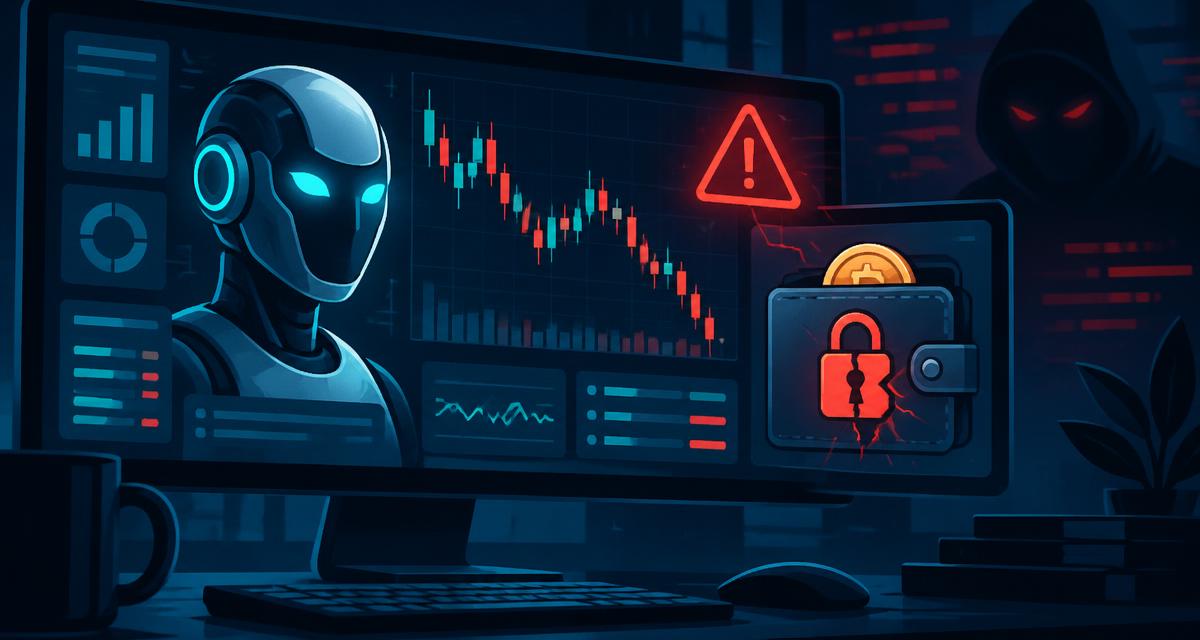
An AI trading bot that runs around the clock, finds arbitrage opportunities and makes money while you sleep. Sounds tempting, doesn't it?
It is also an almost perfect pitch for a crypto scam.
Security researchers documented two very different versions of this trick in 2026. In one, victims downloaded software advertised as an AI trading assistant, only to have their browser wallets replaced with malicious copies. In another, victims followed YouTube tutorials for supposedly AI-built arbitrage bots, deployed smart contracts themselves and sent funds into contracts designed to steal them.
The lesson is not that all AI trading tools are scams. It is that a convincing AI story tells you nothing about the safety of the software, contract or wallet behind it.
This guide explains the verified attacks, the warning signs and what to do before you connect a wallet or fund an unfamiliar bot.
Quick Answer: Can Fake AI Trading Bots Steal Your Crypto?
Yes. Fake AI crypto trading bots can steal cryptocurrency by distributing malware, replacing browser-wallet extensions or tricking users into funding malicious smart contracts. In 2026, HP documented a fake AI trading-agent download that targeted browser wallets, while TRM Labs traced approximately $517,205 from 224 victim wallets in a separate fake trading-bot tutorial campaign. A hardware wallet reduces some key-theft risks but cannot prevent every harmful transaction you approve.
Two Real AI Trading Bot Scams Investigated in 2026
| Research | How the scam worked | What was established |
|---|---|---|
| HP Wolf Security, September 17, 2026 | A fake AI crypto trading-agent installer delivered malware that replaced browser-wallet extensions with malicious lookalikes | HP documented wallet-credential harvesting behavior; it did not publish a verified total loss for this campaign |
| TRM Labs, September 14, 2026 | YouTube tutorials promising AI-powered arbitrage led people to a lookalike compiler that deployed malicious contract code | TRM traced 274.60 ETH, about $517,205 at transfer-time values, from 224 victim wallets between February and August 2026 |
These are separate investigations into different attack methods. Don't add their figures together or describe them as one coordinated hack.
Scam One: The Fake AI Trading App That Replaces Your Wallet
In its September 2026 threat report, HP Wolf Security described a website advertising a crypto trading assistant that borrowed the appeal of a recognizable AI product.
The promised reward was automated trading. The actual download delivered Needle Stealer.
HP's investigation found that the infection used a legitimate Microsoft-signed executable as part of its delivery chain. The malware then searched the browser for cryptocurrency wallet extensions, including wallets such as MetaMask and Coinbase Wallet, and replaced them with malicious imitations.
To the victim, the familiar wallet interface could still appear to be there. But when a password was entered, the fake extension could capture it for the attacker.
Why this matters: You might think you are simply installing a trading assistant. In reality, the attack is aimed at the wallet you already use.
HP observed this campaign in telemetry from April through June 2026 and published its findings in September. It did not establish a public figure for money stolen in that particular operation. Read HP's own announcement.
What the attacker wanted you to do
- Find or trust a website advertising an AI trading agent.
- Download and run a seemingly legitimate installer.
- Continue using your usual browser wallet, unaware it had been replaced.
- Enter wallet credentials into the malicious lookalike.
No cutting-edge AI was needed to crack the blockchain. The attackers used interest in AI to get malware installed on a computer.
Scam Two: You Build and Fund Your Own Wallet Drainer
The second case is stranger because the victim isn't necessarily downloading an obvious wallet-stealing application.
TRM Labs' September 14 investigation described YouTube videos promising to teach viewers to build crypto arbitrage bots with Claude. Some videos used AI-generated presenters or voices, matching scripts and manufactured positive comments.
Viewers were guided through steps that looked technical and believable: prepare a wallet, copy code, deploy a contract and add funds for trading.
But the videos directed users to a counterfeit development environment designed to resemble the familiar Remix interface. The source code people saw was not the code ultimately deployed. In a variant analyzed by TRM, the malicious site substituted different smart-contract bytecode.
The deployed contract contained no genuine AI trading or arbitrage logic. Instead, it redirected funds to addresses controlled by the operators once the victim followed the tutorial's instructions.
The trap: The victim could approve each transaction personally, using a real wallet. That meant ordinary phishing and approval warnings might never appear.
The verified losses in that campaign
TRM identified nine closely related tutorials and traced 234 funded contracts back to 224 victim wallets. It reported 274.60 ETH, valued at approximately $517,205 when the transfers occurred, reaching six collection addresses between February and August 2026.
Those figures apply to the specific campaign TRM investigated. They are not an estimate of every fake AI trading scam worldwide, and they should not be described as current ETH value.
TRM also found that some victims were urged to deposit additional crypto after the original funds disappeared, using a fabricated technical error as the excuse.
A legitimate-looking code editor, readable source and reassuring YouTube comments were not enough to establish what was actually running on-chain.
Why AI Trading Bot Scams Can Look So Convincing
The most persuasive scams combine something real with something false.
AI tools genuinely can assist with software development, data analysis and trading research. But AI cannot guarantee profit, eliminate slippage or turn an untested contract into a safe one.
Attackers exploit the gap between what the software is claimed to do and what the user can actually verify.
| Sales pitch | What to check instead |
|---|---|
| "Built with ChatGPT or Claude" | Can the actual product, code and deployment be independently verified? |
| "Guaranteed daily arbitrage profits" | Where is independently verifiable evidence of returns after fees, failed trades and losses? |
| "No coding experience needed" | Who wrote, audited and controls the contract or installer? |
| "Thousands of successful users" | Are testimonials and trading records independently verifiable? |
| "Just connect your wallet and press Start" | Exactly what transaction are you authorizing, and where will funds go? |
| "Add more funds to unlock profits" | Is this simply a second demand for money after an initial loss? |
A polished interface is marketing. It is not a security audit.
Seven Red Flags Before You Install or Fund an AI Crypto Bot
- The bot guarantees returns. Trading strategies can lose money. Promises of risk-free or consistent extraordinary profit deserve skepticism.
- The download comes from an unfamiliar domain. A trustworthy-looking brand name or professionally designed website doesn't prove the installer is safe.
- You're told to disable antivirus or browser warnings. Treat that as a serious stop sign.
- A tutorial links to an unfamiliar compiler or asks you to paste and deploy code you cannot verify. The displayed code may differ from the deployed contract.
- The bot needs your recovery phrase, private key or wallet backup. Stop. No legitimate trading performance claim justifies handing over those credentials.
- You're pushed to send crypto to fund a contract before you understand the transaction. Treat that money as at risk, even when your own wallet signs it.
- A failed setup suddenly requires extra liquidity, activation fees or an unlock payment. TRM documented this kind of second-payment attempt in its 2026 investigation.
One suspicious detail does not prove fraud, but several together are a compelling reason not to proceed.
Would a Hardware Wallet Have Prevented These Attacks?
Not in every case. This distinction is essential if you're choosing a wallet after reading about a scam.
A reputable hardware wallet generally keeps signing keys on a dedicated device rather than exposing them to the computer running your browser. That can reduce the risk of certain malware attacks against software-wallet keys.
However, it does not make an unsafe smart contract safe. If a user knowingly sends funds into a malicious contract, even after confirming the transaction on a hardware-wallet screen, those funds may still be lost.
Similarly, a hardware wallet does not help if its recovery phrase is exposed, or if someone signs a harmful approval without checking the details.
| Threat | Can a hardware wallet help? | What it cannot guarantee |
|---|---|---|
| Malware extracting software-wallet keys | Often yes, by keeping keys on a separate signing device | It cannot clean an infected computer or protect an exposed recovery phrase |
| Malicious browser extension | Can reduce key exposure | A fake interface can still mislead you about the transaction to approve |
| Sending ETH to a fraudulent AI-bot contract | Not automatically | You can authorize an irreversible loss yourself |
| Malicious token approvals | Limited protection | The device may sign an approval that the user misunderstands |
For a closer comparison, read Hardware Wallet vs Software Wallet and Can a Hardware Wallet Be Hacked?.
The Smarter Way to Separate Trading From Long-Term Savings
Instead of expecting one wallet to do everything, give each wallet a purpose.
Long-term wallet: Hold savings you do not regularly connect to experimental applications. Consider a suitable hardware wallet and an offline, verified recovery backup.
Active-use wallet: Keep a limited working balance for trading, DeFi or testing new protocols. Do not reuse the same recovery phrase as your savings wallet.
Experimental wallet: If you insist on testing unfamiliar software, use a separate wallet with only funds you are prepared to lose. Isolation limits the damage but does not make a fraudulent contract trustworthy.
If malware has already infected the computer, simply opening another wallet on that machine is not a safe workaround.
Find a Wallet Setup That Fits How You Use Crypto
The right wallet for someone holding Bitcoin for five years is not necessarily the right setup for someone actively using DeFi or automated trading.
CryptoWalletPicker helps compare options based on your needs. The quiz is a starting point, not a security guarantee.
What to Do if You've Downloaded or Funded a Suspicious AI Bot
What to do next depends on whether you installed software, authorized a smart contract or exposed a recovery phrase.
If you installed suspicious software
- Stop accessing crypto accounts from the potentially infected device. Disconnect it from the network if practical and safe.
- From a separate trusted device, secure relevant exchange and email accounts, and review their login sessions and authentication methods.
- Treat wallet secrets and credentials used on the infected computer as potentially exposed until a qualified assessment shows otherwise.
- If the wallet's keys or backup may have been compromised, generate a new wallet on a trusted clean device and move remaining funds there as safely as possible. Merely reinstalling a wallet app or changing its password does not rotate a stolen recovery phrase.
- Have the computer professionally assessed and remediated. A malware scan alone may not establish that the system is trustworthy.
If you deployed or funded an unknown bot contract
- Do not add more cryptocurrency because a website says the bot is stuck or requires extra liquidity.
- Save transaction hashes, wallet addresses, relevant URLs and screenshots for documentation, without sharing private keys or recovery phrases.
- Check remaining wallet balances and any token approvals using independently reached, reputable tools. Revoking an approval may help with certain attacks but cannot reverse funds already sent to a malicious contract.
- Seek help from credible security specialists or appropriate authorities if funds were stolen. Be wary of anyone offering guaranteed recovery for an advance fee.
If your recovery phrase was exposed
Treat the wallet as compromised. Set up a new wallet with a different, securely generated recovery phrase on a trusted device, and transfer remaining funds promptly where possible. Changing a PIN, password or app does not revoke access for someone who knows the old phrase.
For general recovery precautions, consult Ethereum.org's scam-response guide and our Crypto Security Guide.
How to Evaluate a Legitimate AI Crypto Trading Tool
AI-assisted trading software isn't automatically malicious, but it deserves due diligence before it touches your money.
Ask five practical questions:
- Who operates it? Can you identify the developer, company and support channels independently?
- What access does it need? Is it requesting custody, withdrawal permissions, unrestricted API access or the ability to sign arbitrary transactions?
- Can you verify the installer and code? Use original publisher sites and trusted distribution channels, not a link from a random tutorial or direct message.
- What is the worst-case loss? Check leverage, strategy drawdowns, smart-contract behavior and potential credential exposure, not only claimed profits.
- Can it be tested safely without your main wallet? Prefer independent evaluation, limited permissions and small segregated balances, while recognizing that a small test does not prove a product safe.
In some trading setups, an API key with appropriately restricted permissions can avoid giving a bot direct access to wallet recovery secrets. Even so, API keys can be abused, and exchange-specific permission settings must be verified. Never give an unknown tool unrestricted withdrawal authority.
The Bigger Lesson: The Scam Is Often the Workflow
The two 2026 investigations point to the same human weakness from different directions.
In HP's case, people were persuaded to install software that compromised an existing wallet. In TRM's case, people were persuaded to deploy and fund the malicious contract themselves.
One attacked the device. The other exploited trust in a tutorial and a counterfeit compiler.
Neither required breaking Bitcoin or Ethereum cryptography. Neither proves AI trading itself is inherently fraudulent. And neither is solved simply by buying a new wallet.
The useful lesson is to verify software, understand transactions, isolate funds and choose wallet security appropriate to the job.
If your current setup mixes long-term savings with experimental apps, now is a sensible time to review it.
Frequently Asked Questions
Are AI crypto trading bots scams?
Not all AI trading software is fraudulent. But fake trading-bot downloads and tutorials have been used to steal cryptocurrency. Research the developer, verify software and code independently, and never trust promises of guaranteed profits.
How do fake AI trading bots steal crypto?
Documented methods include installing malware that replaces browser-wallet extensions and tricking users into deploying and funding malicious smart contracts. The two methods work differently, and neither requires attackers to defeat blockchain cryptography.
Can an AI trading bot steal crypto without my seed phrase?
Yes. Malware may steal credentials or wallet data, while a malicious contract can take funds you voluntarily send into it. Some attacks also exploit approvals. A stolen recovery phrase is only one possible way to lose crypto.
Did fake AI trading bot videos really steal over $500,000?
TRM Labs traced 274.60 ETH, valued at about $517,205 when transferred, from 224 victim wallets in one documented campaign between February and August 2026. That is one investigated campaign, not the total losses from all AI-related crypto scams.
Does a hardware wallet protect against fake AI crypto bots?
A hardware wallet helps keep signing keys away from malware on a computer, but it cannot make an unsafe transaction safe. If you approve sending funds to a malicious contract or sign an unclear request, you can still lose crypto.
Is a profitable AI arbitrage bot advertised on YouTube trustworthy?
A polished video, AI-generated presenter, positive comments and screenshots of profits are not proof. In a 2026 case investigated by TRM Labs, tutorials directed viewers to a counterfeit compiler that deployed malicious code instead of the displayed trading bot.
What should I do if I installed a fake AI trading bot?
Stop using the affected computer for wallet access, disconnect it from networks when appropriate, and assess the compromise from a trusted clean device. If keys or backups may have been exposed, move remaining funds to a newly generated wallet and seek competent security help. Review approvals separately and never enter a recovery phrase into a recovery website.
How can I choose a safer crypto wallet?
Choose based on how keys are stored, transaction confirmation, recovery options and how you use crypto. Separating long-term savings from experimental trading can reduce risk. CryptoWalletPicker offers a free quiz to compare suitable wallet setups.
Sources and Further Reading
Research verified November 9, 2026. Figures refer to the scope and dates of the individual investigations, not total industry losses.
- TRM Labs, September 14, 2026: Fake AI Trading Bots Are Getting Victims to Build Their Own Drainers
- HP Wolf Security, September 17, 2026: Threat Insights Report
- HP, September 17, 2026: Fake AI Trading Agents Target Browser Wallets
- Ethereum.org: Security and Scam Prevention
- Ethereum.org: Scam Response and Recovery Scams
- MetaMask: Signature Phishing and Token Approvals
Editorial note: The names ChatGPT and Claude appear as examples of brands invoked in scam marketing. The documented fake contracts did not involve genuine autonomous AI trading performed by those products. This article does not imply that their developers operated or endorsed the scams.
Affiliate disclosure: CryptoWalletPicker may earn a commission from eligible purchases through some links elsewhere on this site. Recommendations should be evaluated against your own security, usability and recovery requirements. No wallet can prevent every loss.